How long does it take to charge an electric car? Why such simple question is so hard to answer and what a petroleum refinery has to do with a high power charger.

We frequently encounter this question from individuals new to the realm of electric vehicles:
How long does it take to charge an electric car?
Regrettably, the most accurate response is often the least satisfying:
It depends
Such a vague answer can be disheartening, especially for someone contemplating the switch to an electric vehicle. Generally, we offer a rough estimate to ease the conversation:
Roughly half an hour
However, in this post, we intend to delve into the myriad factors contributing to the ubiquitous "It depends" retort.
A more precise response would encapsulate the following:
Charging time hinges on the size of your car battery, the charging speed of your car, and the power output capability of the charger
Sounds simple, with only three variables at play, right? What could possibly go wrong?
In reality, achieving optimal charging parameters requires a harmonious alignment of several variables of different nature:
- Generic: Ambient temperature
- On the Car Side: Battery capacity, Battery preconditioning, Battery State of Charge (SoC)
- On the Charger Side: Charger rated power, Charger rated current, Charger rated voltage, Charging cable rated current, Charging cable cooling unit capabilities
- On the Charging Site Side: Occupancy of the charging station, Power supply rated power, Grid temporary power limitations
In total, twelve major variables dictate the charging experience awaiting you at the station. This does not include the payment methods conundrum and other self-sabotaging industry efforts, which warrant a separate publication.
Without delving deeply into statistical jargon, the probability of at least one of these conditions not being met is approximately 99.999999795%, making it almost a certainty.
Why is this the case?
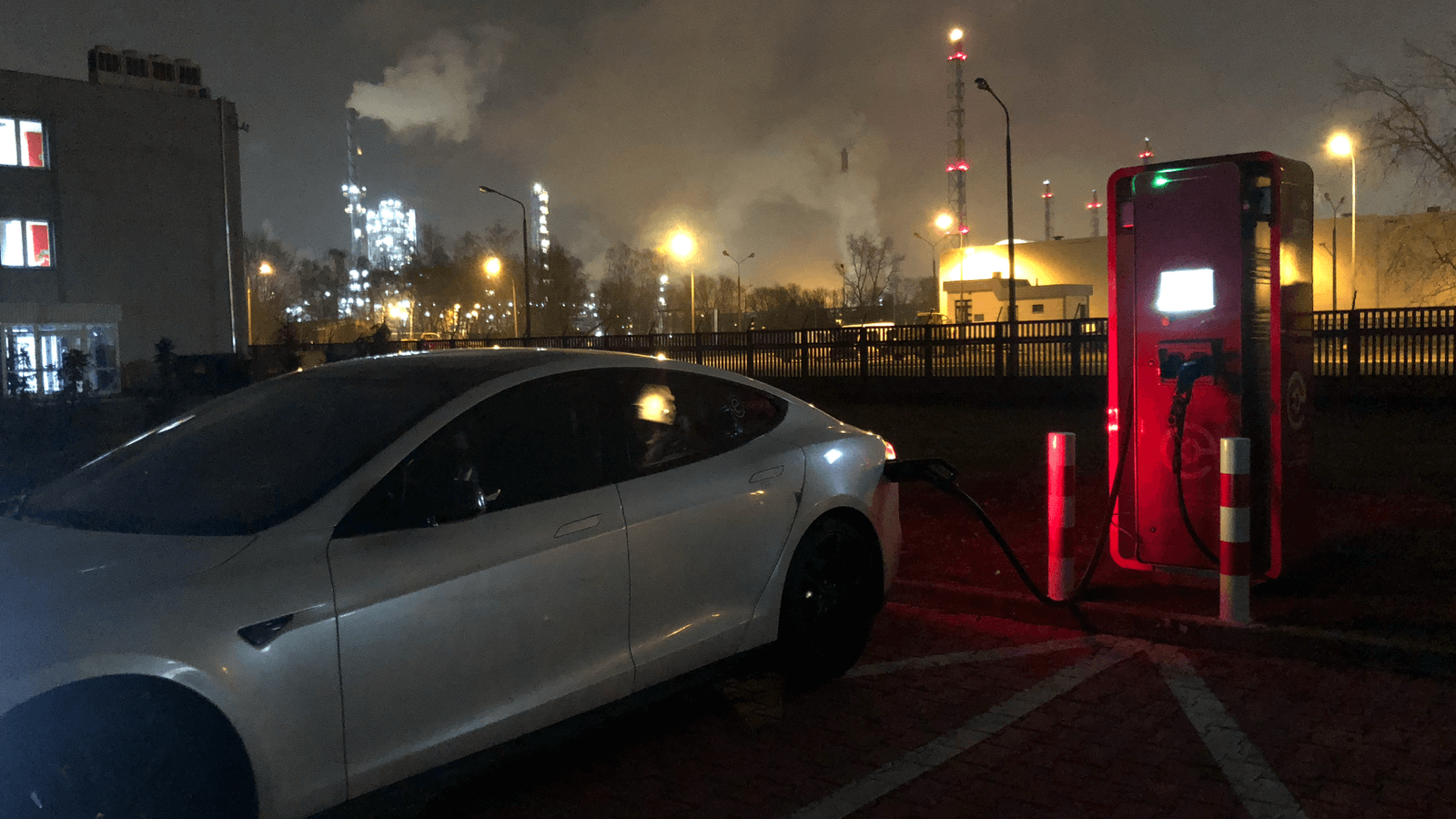
In short, fast charging is a complex endeavour that grows increasingly intricate with the introduction of diverse electric vehicle platforms to the market. If we dissect the process down to its core, fast charging an electric car resembles the endeavour of refining crude oil and delivering the right type of fuel into a vehicle simultaneously.
Electric vehicles can't utilize the alternating current (AC) from the grid in the same vein that gasoline cars can't use the raw materials arriving at refineries. Much like how crude oil undergoes various chemical processes such as distillation, cracking, and reforming, AC current must be rectified, filtered, and regulated. Yet, the resultant DC still necessitates further processing to be fully compatible with the car's charging system.
All these processes must occur in real-time, harmonize with grid requirements, and fit within a device no larger than a kitchen refrigerator—withstanding rain, hail, snow, and scorching sun while delivering a seamless user experience.
Charging time ranks as the foremost pragmatic concern for potential EV buyers, second only to range. We can't expect users to be preoccupied with the intricacies of DC charging. The process must be simplified, despite its inherent complexity compared to traditional refueling. At EUROLOOP, we are dedicated to this mission, striving tirelessly to make those challenges invisible to the end user, until the real answer becomes:
It takes less than a bathroom break
Marek Gutt-Mostowy is the CEO at WILLBERT by EUROLOOP, driving customer-centric EV charging solutions for roadside retail environments. Before founding EUROLOOP in 2017, he worked in a high-tech environment at CERN. EUROLOOP emerged as an award-winning spin-off from Elon Musk’s SpaceX Hyperloop Pod Competition, where Marek’s team won the Innovation Award. Under his leadership, The company has evolved into an EV solutions provider, delivering seamless, scalable, and retail-optimized charging infrastructure.
Stay in the loop
Get the latest on EV charging, forecourt retail, and the WILLBERT ecosystem — straight to your inbox.
Articles you might be interested in
Flash charging: Releasing Amber II FlaSHUB
FlaSHUB: 1 MW+ flash charging, simplified
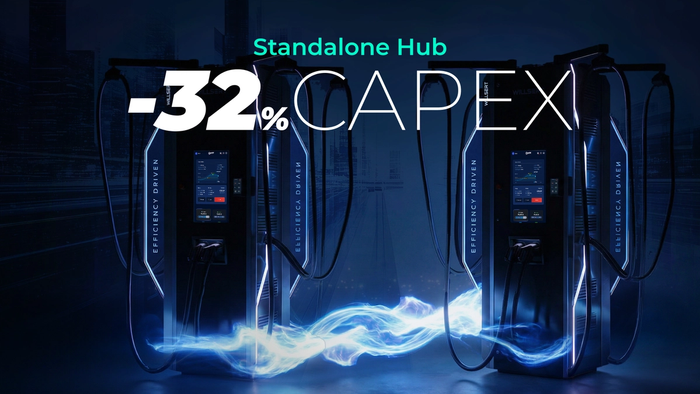
How the Standalone Hub Architecture Cuts Charging Site CAPEX by 32%
When a Charge Point Operator plans an 8-plug DC fast-charging site, the choice of hardware architecture has a bigger impact on total investment than most operators expect. In this case study, we compare a conventional standalone charger deployment against WILLBERT's S-HUB configu
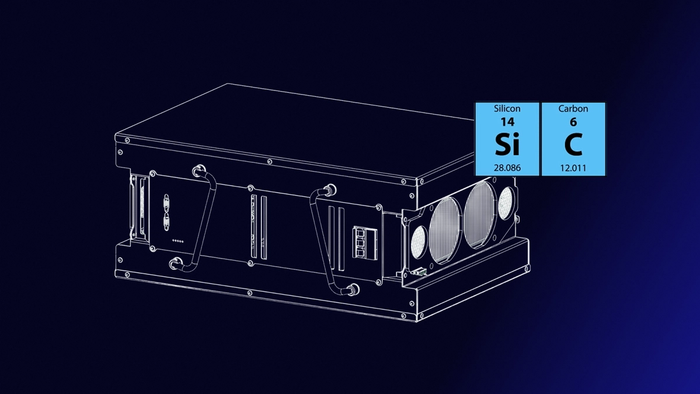
From Futuristic to Standard: Silicon Carbide
There was a time when silicon carbide in EV charging sounded like something reserved for the future. Seven years ago, it was still considered an advanced, almost experimental semiconductor technology, discussed mainly in the context of aerospace, high-performance electronics, and