Charge Smarter, Not Harder: Scalable EV Infrastructure for Retailers

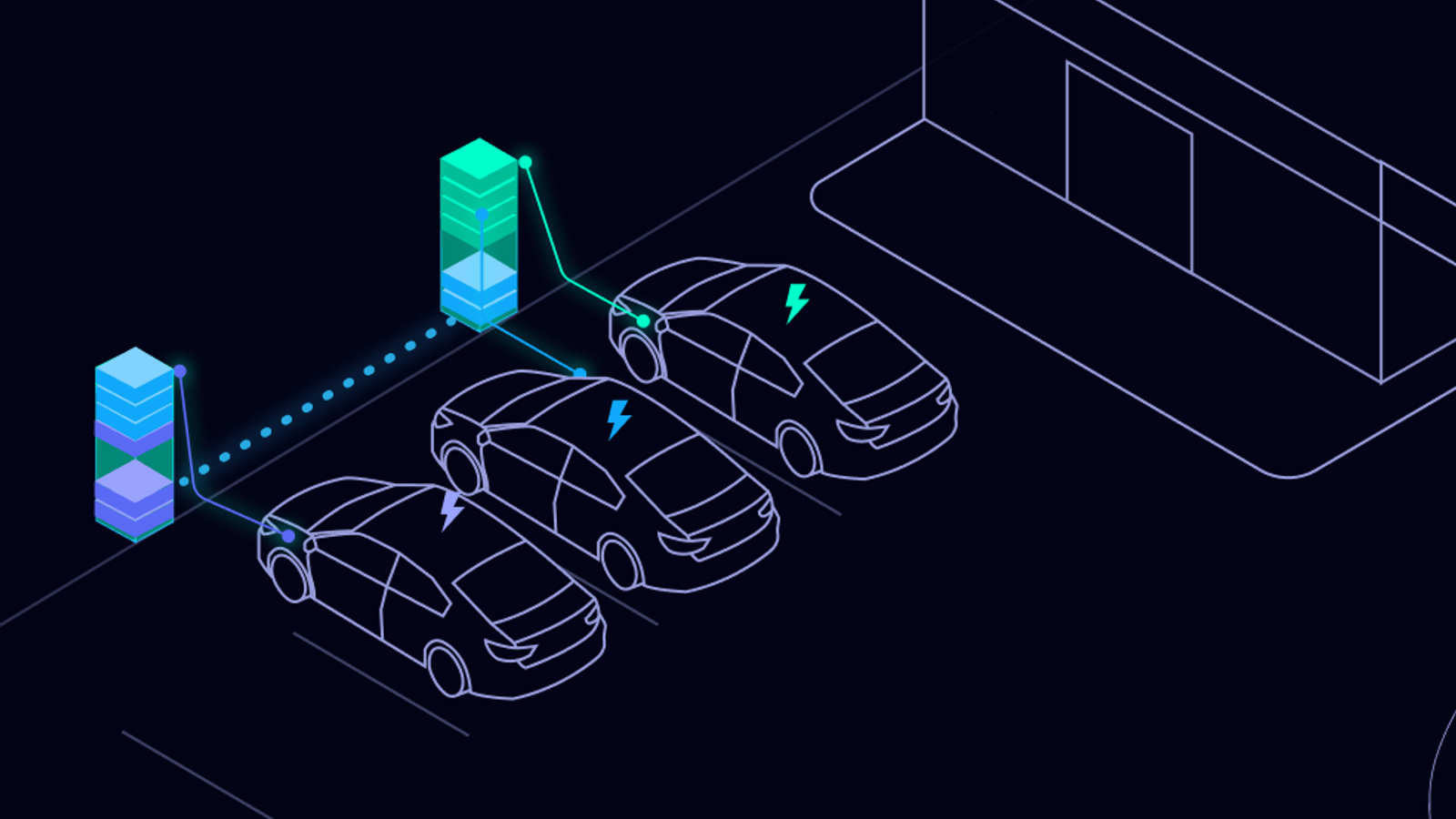
As electric vehicle (EV) adoption continues to grow, there is an increased demand for accessible, reliable charging infrastructure. Roadside retailers are uniquely positioned to meet this demand with traditional fuel stations providing an ideal charging location. However, integrating EV charging infrastructure isn’t as simple as installing a few chargers. Retailers require solutions that are not only cost-effective at the outset, but can scale seamlessly as charging demand grows. Traditional grid upgrades are often slow, expensive and rigid. To future-proof charging operations, retailers must embrace modular power systems and intelligent power allocation—technologies that enable flexible deployment, real-time optimisation, and efficient scaling in line with customer demand.
The current EV charging landscape faces significant challenges around grid infrastructure, energy efficiency, and the cost and ROI of charger ownership for retailers. As the popularity of EV’s grows these issues are further exacerbated, significantly impacting the experience of the end user and overall EV adoption. To meet this growing demand for fast, accessible charging, it is essential to proactively develop robust EV charging infrastructure that offers rapid charging speeds and can be scaled as demand continues to grow.
MODULAR POWER
Using modular power for EV charging offers numerous advantages for roadside retailers. Installing EV chargers is costly and, particularly when starting out, it can be difficult to anticipate demand. Modular power allows retailers to expand their charging capacity as demand grows, meaning initial upfront investment can be significantly reduced.
Retailers can scale at ease by simply adding additional power modules to the existing charging unit. One Amber II unit from WILLBERT, for example, can scale from 60kW up to 360kW and by linking two Amber II units via a DC-link to create an ’S-HUB’ eight vehicles can be charged simultaneously, sharing up to 720kW of power. This modular and scalable design allows for a phased installation (power can be added in 60kW modules), enabling retailers to start with a smaller system and expand as demand grows. A standalone Amber II unit can have one or two user interface and can charge up to four vehicles.
The S-HUB architecture combines the simplicity of standalone chargers with the flexibility of distributed systems.
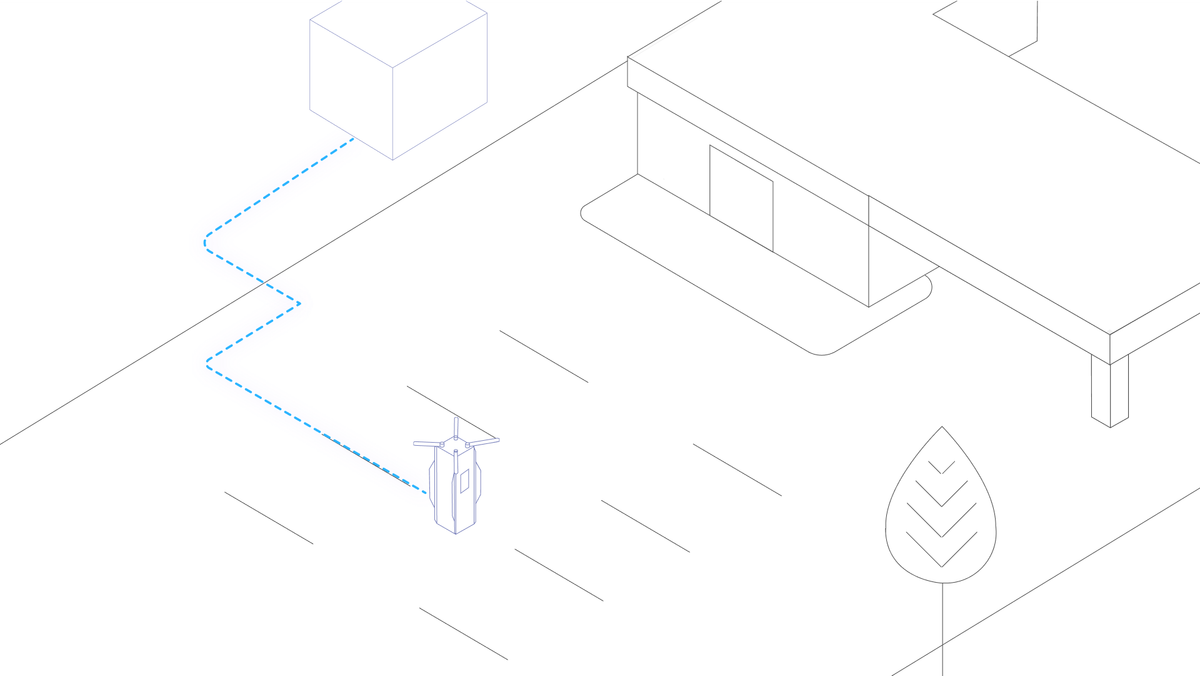
Standalone chargers are simple to install and maintain and require less of an initial investment, however they are limited when it comes to power.
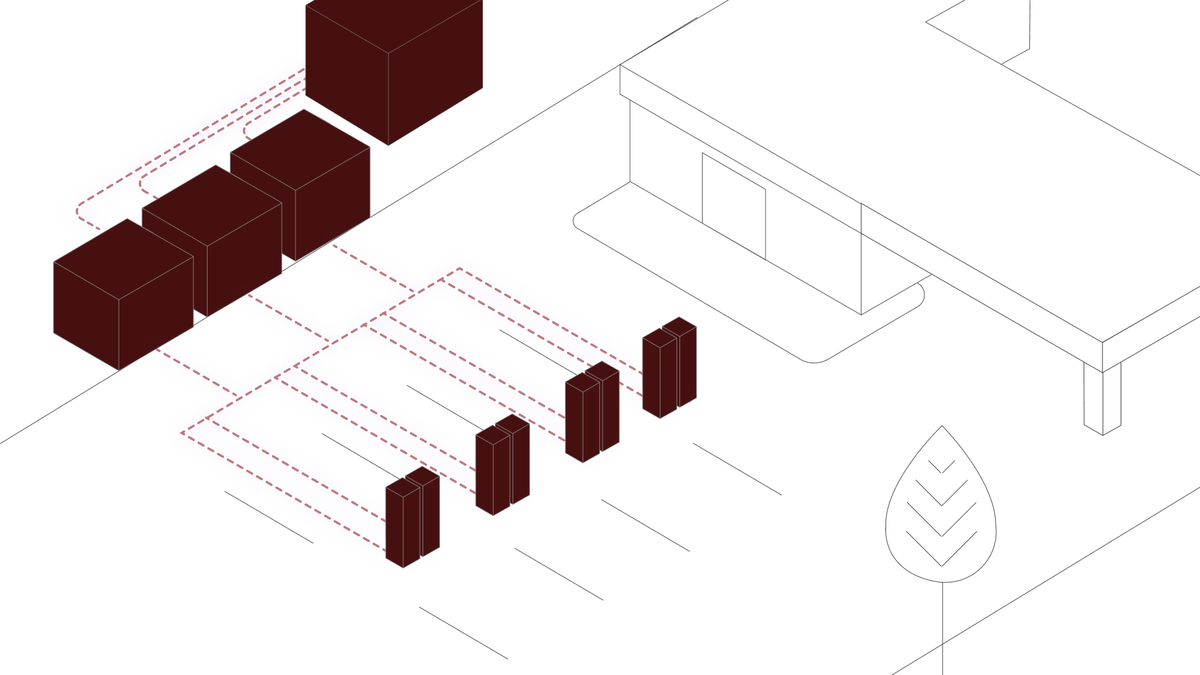
Distributed chargers on the other hand have greater power and flexibility but this comes at a price. They require a more complex and expensive installation, more space and come at a higher cost.
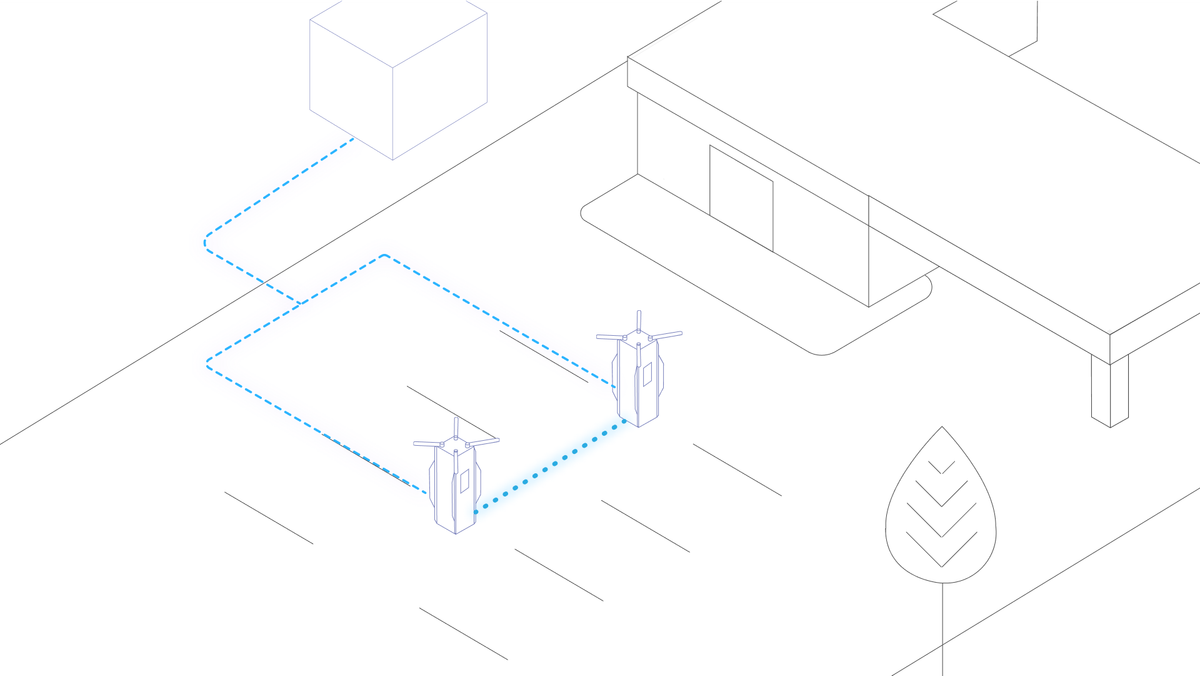
With WILLBERT’s S-HUB, the power modules are housed within the chargers themselves with no need for a separate power cabinet. This allows for easier installation and maintenance and affords a huge amount of flexibility when it comes to site layouts.
For example, to install a distributed system delivering 600kW of power across 8 plugs (two-face configuration) would incur an installation and cabling cost of €128,987. In contrast, WILLBERT’s Amber II S-HUB achieves the same power and functionality with a significantly lower investment, costing just €55,771 – a 131% saving. This efficiency stems from the S-HUB’s minimized trenching and cabling, and centralized power routing via DC Link, all of which streamline the grid connection and site works. The result is a more scalable, cost-effective solution to high-power charging deployment.
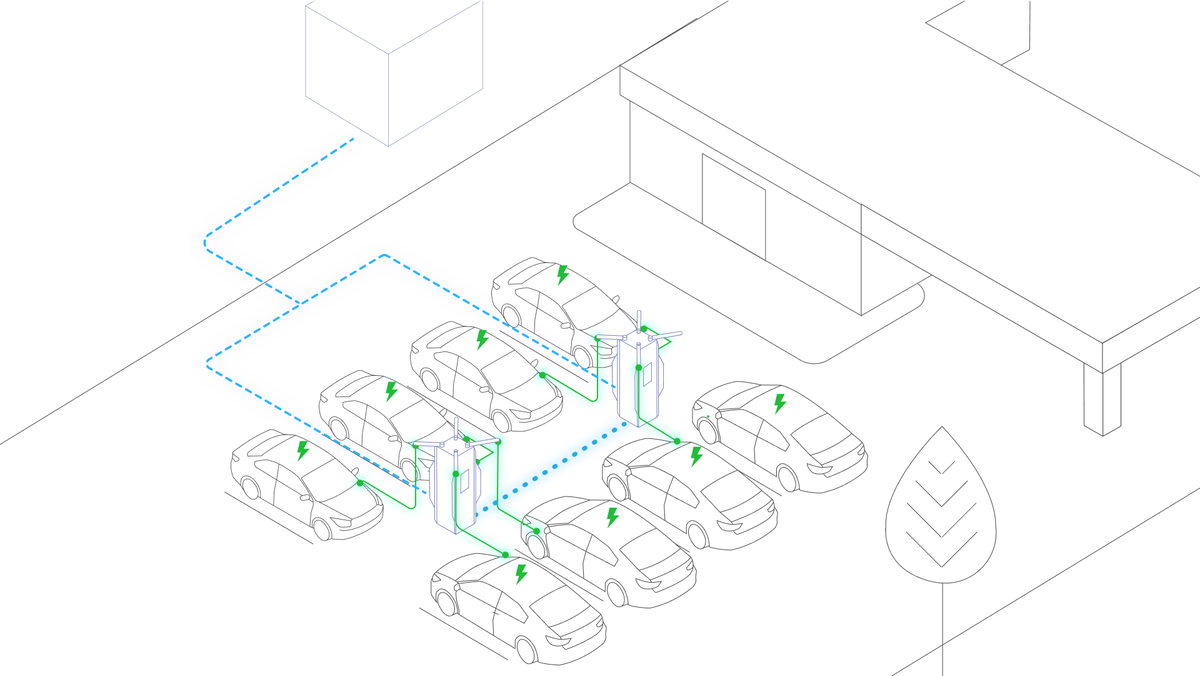
SMART POWER ALLOCATION
Smart Power Allocation refers to intelligent management and distribution of available electrical power among multiple EVs that are charging simultaneously. This helps to maximise charger utilisation and reducing operational costs.
WILLBERT’s S-HUB design allows up to 8 vehicles to charge simultaneously with up to 720kW of power. Smart Power Allocation ensures that this available power is split among the vehicles according to vehicles demand. The power can also be reallocated during the charging session, maximising power delivery. In fact, the power assignment is re-evaluated every few seconds to ensure the optimal power delivery. This dynamic reassignment maximises charging efficiency by minimising energy waste, resulting in significant cost savings for the retailer. The intelligent allocation also improves the grid connection efficiency and ensures that the system operates at its highest capacity, delivering optimal performance across all charging stations even during times when demand peaks.
This also avoids a situation where one charging point is providing high power, whilst another is disabled or providing very low power. Not only does this ensure a unified experience for charging customers it also ensures all equipment is used efficiently rather than an overused module requiring replacement whilst another is underutilised.
For the end user this ensures fast charging speeds, reducing wait times for chargers and improving the overall user experience. For many EV drivers charging speeds are one of the most important factors when selecting a charging location.
FUTURE-PROOFING WITH FLEXIBILITY
As the mobility landscape continues to evolve it is impossible for retailers to not invest in EV infrastructure. By harnessing both modular power and smart allocation, retailers can reduce capital expenditure by avoiding costly grid upgrades, simply and efficiently scale their EV infrastructure as demand grows and utilise assets to their fullest, ensuring cost efficiency savings and a great end-user experience.
SMART POWER ALLOCATION IN ACTION
1. A high-voltage vehicle starts charging at the one-face AMBER II S-HUB charger. This particular charger has 4 Power Modules (PMs). A second charger with the same set-up adds up to a total of 480 kW shared across both chargers via a DC link. This compact configuration is ideal for high-power curbside hubs where space is limited.

2. The vehicle requests 310A of current. The charger responds by using all 4 PMs from the first charger and 1 PM from the second charger, delivering 242 kW to meet the vehicle's request and get the charging session underway.
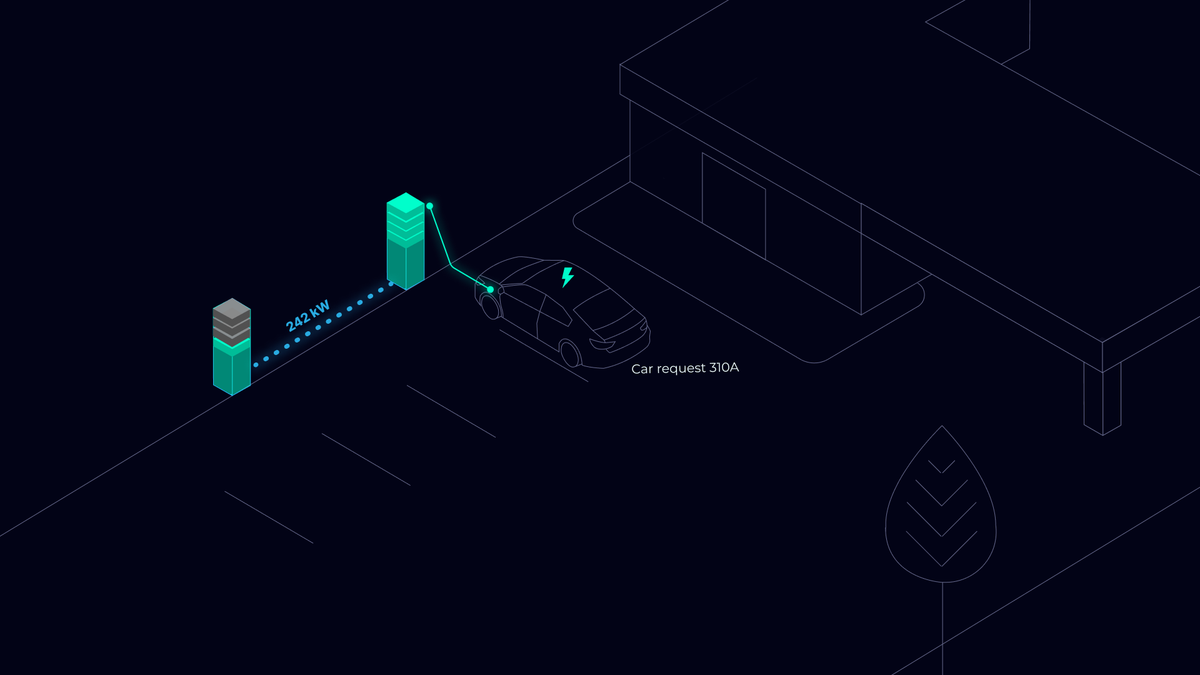
3. Each Power Module provides about 62A, ensuring the power is distributed evenly across all active modules.
4. Another vehicle arrives to the same charging station and begins charging. This is a low-voltage vehicle requesting up to 294A of current. This is where Smart Power Allocation kicks in.
5. The system responds by dynamically reallocating one Power Module from the high-voltage vehicle on the first plug to the low-voltage vehicle on the second plug. It also assigns the three additional Power Modules from the second charger.
6. Now, each power module supplies around 61A to the high-voltage vehicle (87% of the power modules in use) and 98A to the low-voltage vehicle (70% of the power modules in use).
7. The power delivered to both vehicles meets their charging needs, with 243 kW going to the high-voltage vehicle and 114 kW to the low-voltage vehicle.
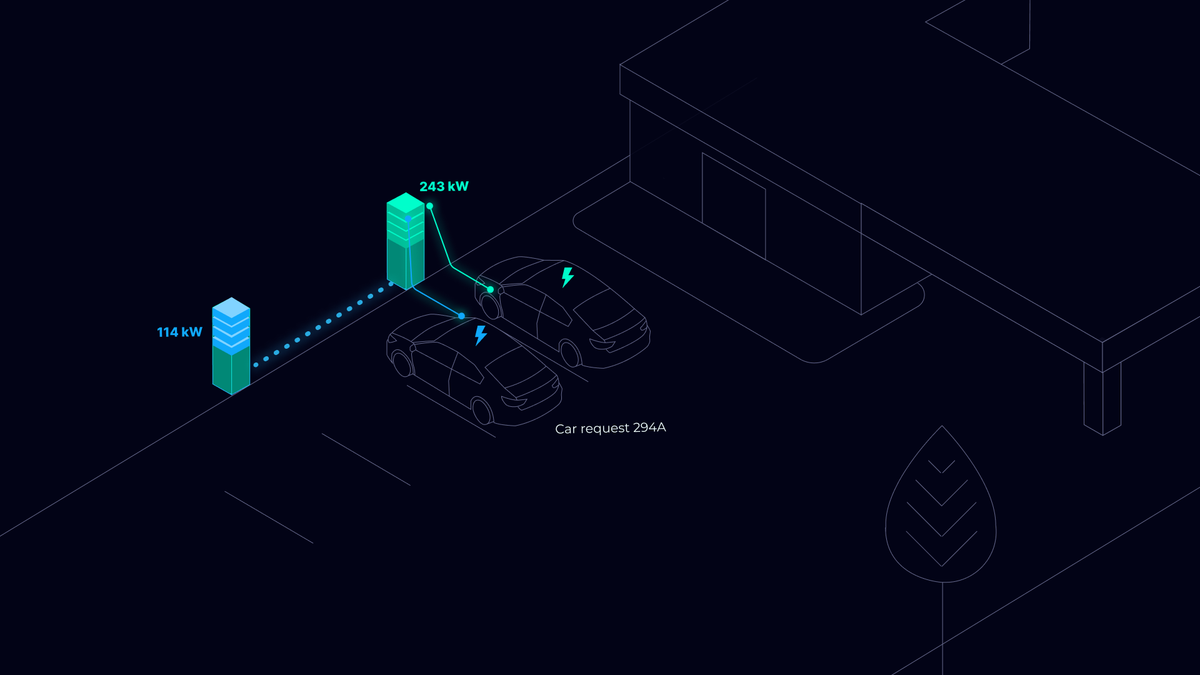
This example clearly demonstrates how Smart Power Allocation dynamically manages PM assignments, ensuring even distribution of current among active PMs, equitable treatment of multiple vehicles during high-demand conditions and efficiency in handling simultaneous high-load sessions. Intelligent allocation prevents overloading individual PMs and optimizes available resources to best serve any active plugs.
By combining modular power with smart allocation, roadside retailers can avoid costly, time-consuming grid upgrades and instead ramp up charging capacity in phased approach in line with customer demands. Real-time energy reallocation ensures every charger runs at peak efficiency, cutting waste, spreading wear evenly across modules, and guaranteeing fast, consistent charge speeds that today’s EV drivers demand. This flexible, phased-investment approach minimizes upfront costs, maximizes asset utilization, and delivers rapid ROI, all while laying a scalable foundation that adapts seamlessly as EV adoption accelerates—future-proofing retail sites and keeping them ahead in the electric mobility revolution.
If you’d like to learn more about how WILLBERT’s solutions can future-proof your EV charging business, please get in touch.
Rabiaa Rahman-Quereshi is a Senior Marketing Specialist at WILLBERT by EUROLOOP, where she supports brand strategy and go-to-market execution across retail-focused EV charging initiatives. With a strong background in both traditional and fuel retail, she brings valuable insight into the evolving landscape of customer behavior and on-site experience. Prior to joining EUROLOOP, Rabiaa co-founded her own activewear brand, combining business expertise with a passion for lifestyle and design. Her versatile perspective helps bridge the gap between energy infrastructure and retail innovation.
Bądź na bieżąco
Otrzymuj najnowsze informacje o ładowaniu EV, handlu na stacjach i ekosystemie WILLBERT prosto na swoją skrzynkę.
Artykuły, które mogą Cię zainteresować
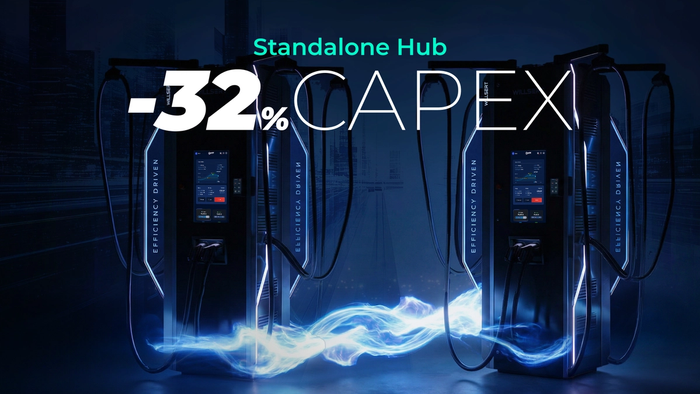
How the Standalone Hub Architecture Cuts Charging Site CAPEX by 32%
An 8-plug DC site, two architectures: four 400 kW standalone chargers against four Amber II units paired into two S-HUB systems. Same plugs, 40% less installed power and €121,000 lower CAPEX.
When Low Voltage Delivers High Power
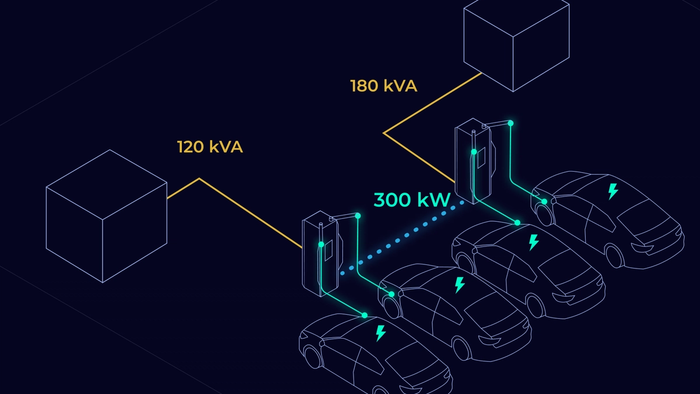
The grid connection decides what a charging site can do. S-HUB combines two independent low-voltage connections on the DC side, so sites without medium-voltage access can still deliver high-power charging.
Optimizing Forecourts and Motorway Service Stations with Smart EV Charger Layouts
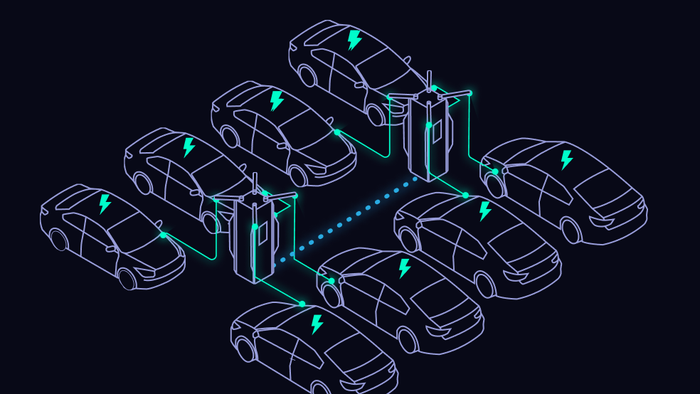
Six ways to fit high-power charging into a forecourt or motorway service area without blocking traffic or retail, from a single 1F standalone unit to a dual-sided S-HUB serving eight cars or eHGVs.