Optimizing Forecourts and Motorway Service Stations with Smart EV Charger Layouts

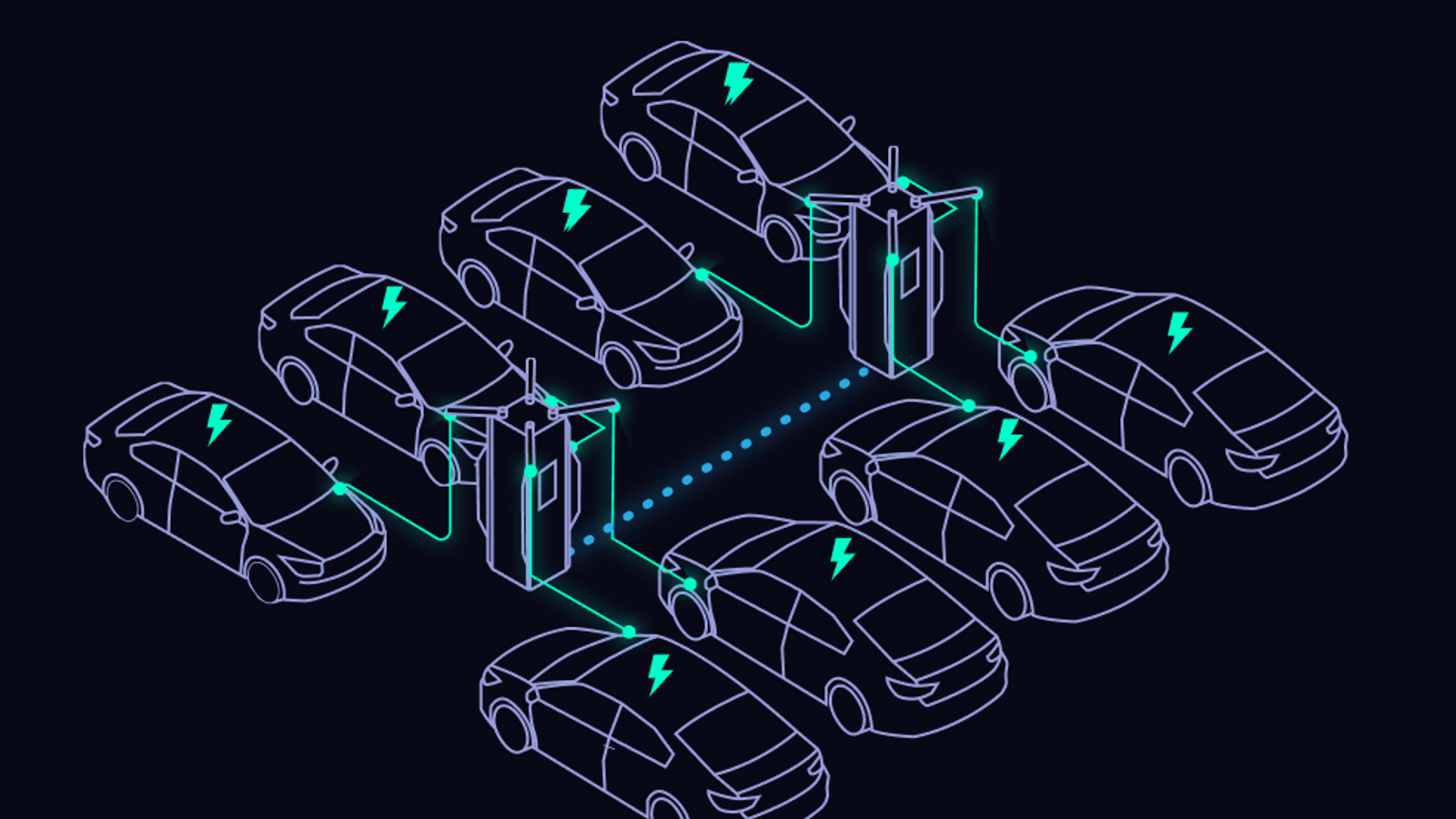
As the shift towards electric mobility accelerates, service stations and motorway service areas (MSAs) must rethink how to integrate EV charging without compromising the flow of vehicles or existing retail operations. High-power charging demands smart layouts that maximize space efficiency, streamline vehicle movement, and enhance customer experience.
With WILLBERT Amber II, these challenges are met with flexible configurations that adapt to any site—from compact forecourts to large highway hubs—while delivering market-leading charging performance.
Layout Efficiency: Adapting to Every Site
The success of EV charging deployment at service stations depends on how chargers fit into the existing infrastructure. Unlike distributed systems that rely on separate power cabinets and complex cabling, WILLBERT’s integrated design keeps all power modules within the chargers themselves, minimizing installation work and freeing valuable space for customer amenities.
As pioneers of the S-HUB (Standalone Hub) architecture, WILLBERT was the first to introduce a true DC Link connection between chargers — enabling multiple units to operate as one unified high-power system. This is possible because the chargers share power modules integrated directly inside each unit, rather than relying on external power cabinets. This innovation has reshaped the way charging hubs are built by unlocking flexible power sharing, higher utilization, faster deployment, and peak performance with lower CAPEX. It is this forward-thinking engineering that now defines the new standard for modern, scalable fast-charging infrastructure.
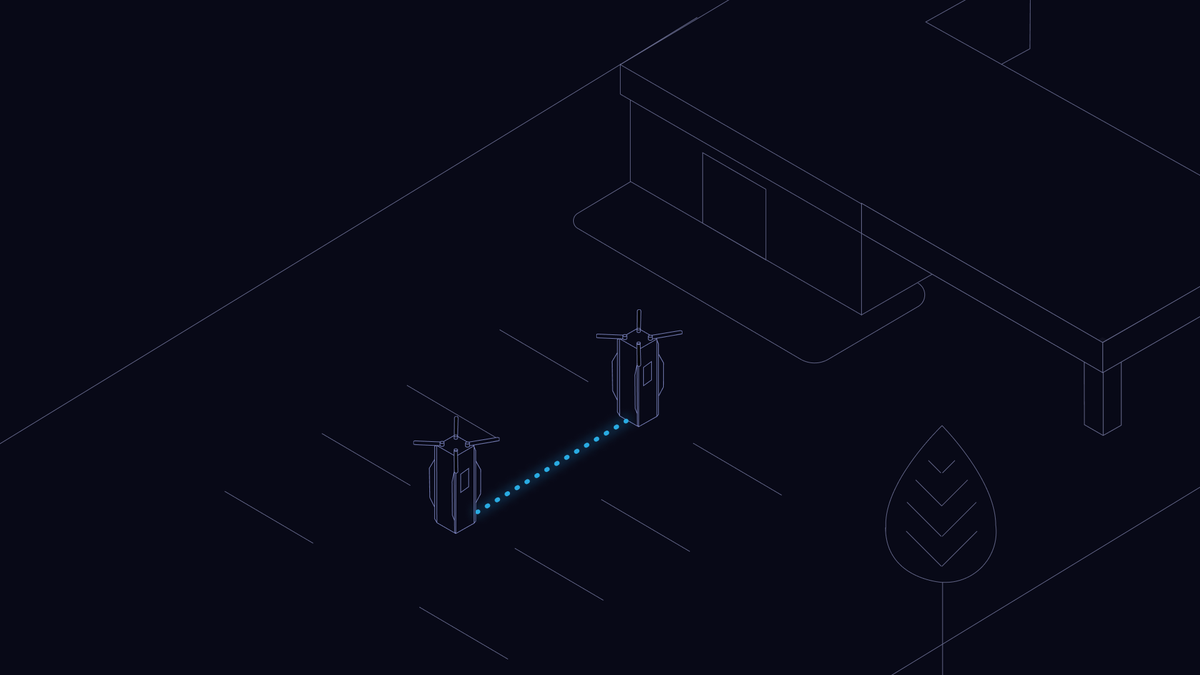
1F Standalone
This configuration represents a classic standalone charger. Designed for places where space and demand for charging is limited. It fits well in curbside locations, smaller service stations or along the edges of busy forecourts. Operators can start with a single unit to establish fast charging capacity and then expand step by step as more vehicles enter the market.
- Compact footprint – optimal for curbside installation or along the periphery of a forecourt.
- Charges 2 vehicles simultaneously with minimal obstruction to traffic.
- Ideal for urban service stations or space-constrained MSAs.

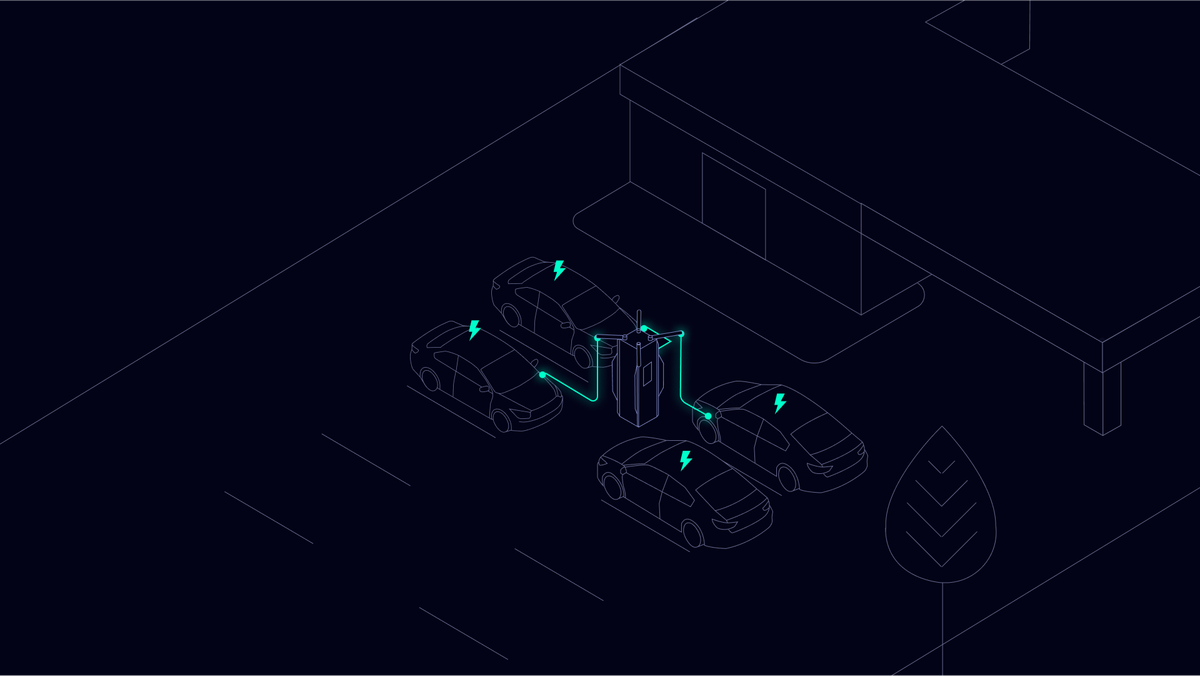
2F Standalone
The dual-sided layout of the 2F Standalone offers more plugs for sites with steady or high traffic. Positioned centrally, it allows vehicles to charge from both sides without disrupting circulation. This type of charger can be easily mounted on existing two-sided parking lots, and in the future the same configuration can even replace traditional fuel pumps. It brings fast charging into existing infrastructure with minimal adjustments and leaves room for scaling up later.
- Dual-sided layout – supports 4 vehicles per charger.
- Perfect for central positioning in forecourts or replacing fuel pumps without redesigning the site.
- Enhances throughput while keeping vehicle circulation smooth.
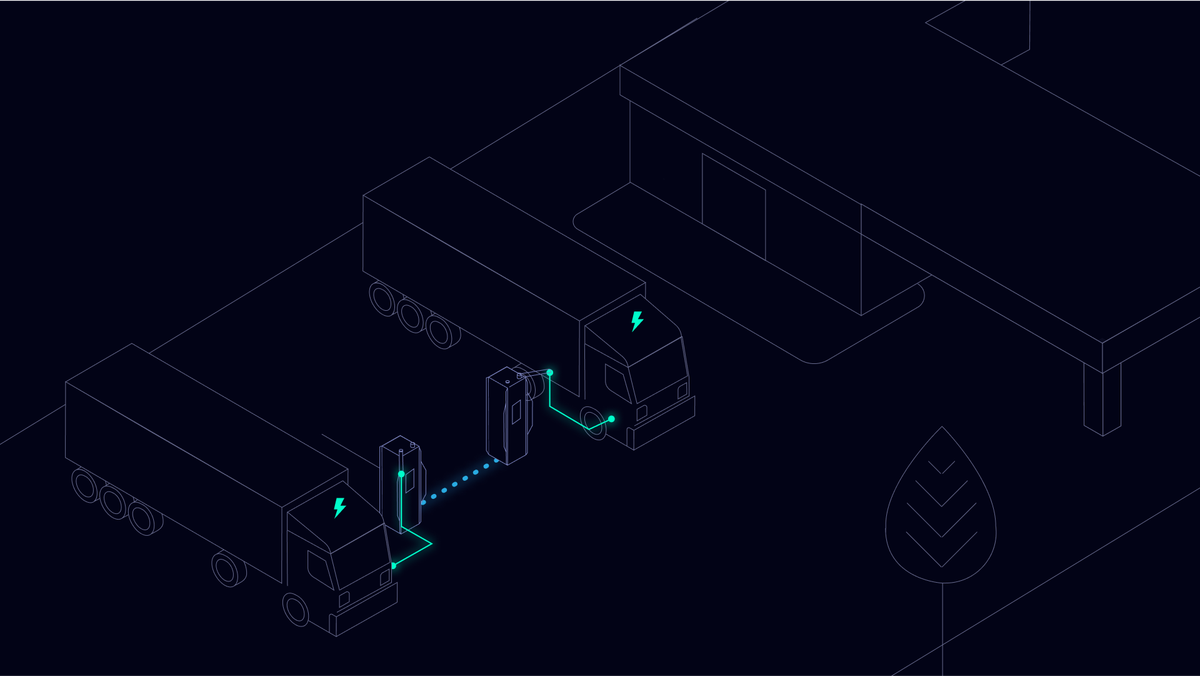
1F S-HUB
By linking two single-face chargers, the 1F S-HUB provides a low space-consuming but powerful setup that can handle high energy demand. It is particularly effective in depots or parking areas where larger vehicles need quick charging access.
- Two single-face units connected via DC Link, sharing up to 720 kW dynamically.
- 4 high-power charging points with minimal footprint.
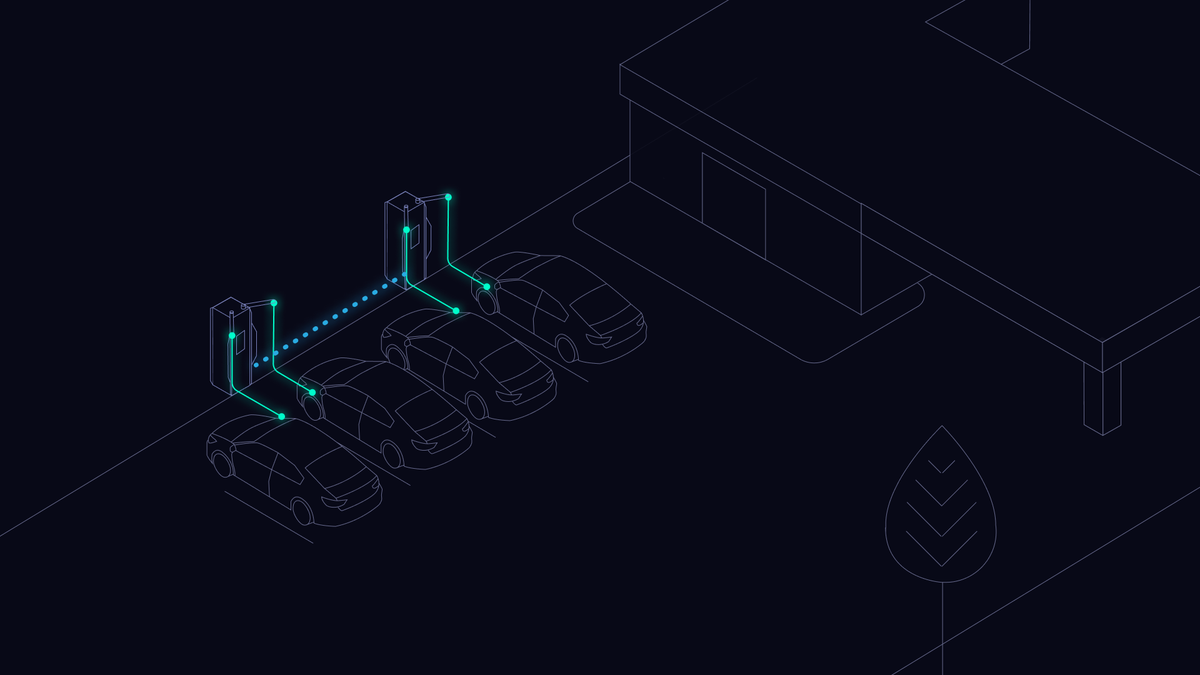
- Excellent for tight layouts with high energy demand, such as eHGV depots or constrained truck parking areas.
2F S-HUB
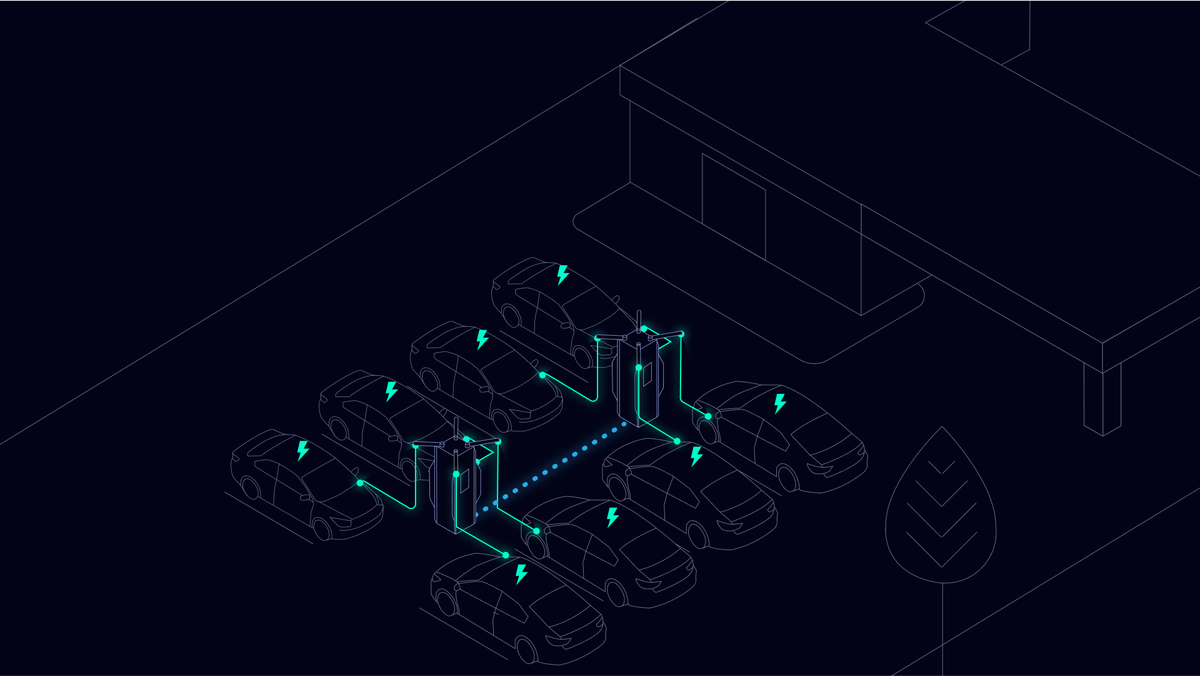
This configuration is designed for the busiest sites, hat require as many plugs as possible, where vehicles need fast charging at scale. Connecting two dual-sided chargers into a hub creates eight charging points with significant power output. It works well in motorway service areas, large parking lots or stations and can be tailored to keep traffic flows separated and efficient. Operators can add further hubs over time, creating a future-ready charging environment that grows alongside demand.
- Two dual-face chargers linked into a hub with 8 plugs, delivering up to 720 kW.
- Designed for large MSAs and service stations where high traffic requires maximum charging density.
- Supports both passenger EVs and electric buses or trucks, with layout flexibility to separate flows if needed.
Technical Advantage: Power and Scalability
The Amber II S-HUB architecture combines modularity with high performance:
- Power modules scale in 60 kW increments, allowing retailers to start small and expand as demand grows.
- Smart Power Allocation dynamically distributes up to 720 kW across all active plugs, ensuring consistent charging speeds even during peak load.
- No separate power cabinets are required—reducing footprint, trenching, and installation costs by over 50% compared to distributed systems.
This approach means service stations can deploy ultra-fast charging without extensive grid upgrades, while maintaining the retail spaces that drive non-fuel revenue.
The dedicated base plate significantly simplifies the installation process of our chargers. By providing a stable and pre-engineered foundation, it reduces the need for complex groundwork and speeds up deployment on-site. Combined with our smart design, the solution requires less cabling, which not only lowers installation costs but also minimizes potential points of failure, ensuring a more efficient and reliable setup.
Enhancing Retail & Customer Flow
Beyond technical efficiency, layout matters for the customer experience:
- Edge-mounted 1F chargers keep central areas free for movement or parking.
- Centralized 2F units allow multiple vehicles to charge simultaneously without creating bottlenecks.
- Creating separate hubs for different vehicle types allows chargers to be positioned at optimal angles, ensuring easy maneuvering, efficient cable reach, and uninterrupted traffic flow across the site.
For retailers, these layouts protect valuable commercial space while offering opportunities to extend dwell time and increase in-session spending through on-site amenities.
The Strategic Advantage for Service Stations
For service stations and MSAs, the challenge is to integrate high-capacity charging without sacrificing the retail experience that defines their business model. WILLBERT Amber II, with its scalable power, space-saving configurations, and seamless retail integration, gives operators the tools to achieve both.
By deploying WILLBERT chargers, stations can:
- Serve more vehicles with fewer chargers,
- Maintain retail revenue streams,
- Future-proof their infrastructure for the growing EV market.
Conclusion
With Amber II, whether as a 1F edge-mounted charger or a 2F S-HUB powering 8 vehicles at once, service stations can deliver ultra-fast, reliable charging while keeping the forecourt efficient and profitable. This is how modern infrastructure adapts to the dual challenge of electrification and retail optimization.
Tomasz Rydz supports the execution of marketing strategy by creating audiovisual content and managing event presence at WILLBERT by EUROLOOP. He has a strong background in automotive marketing, he previously worked at Toyota Central Europe and a renowned tuning company in Florida. At EUROLOOP, he focuses on brand visibility, content creation, and engaging customer experiences in the evolving EV charging market.
Stay in the loop
Get the latest on EV charging, forecourt retail, and the WILLBERT ecosystem — straight to your inbox.
Articles you might be interested in
Flash charging: Releasing Amber II FlaSHUB
FlaSHUB: 1 MW+ flash charging, simplified
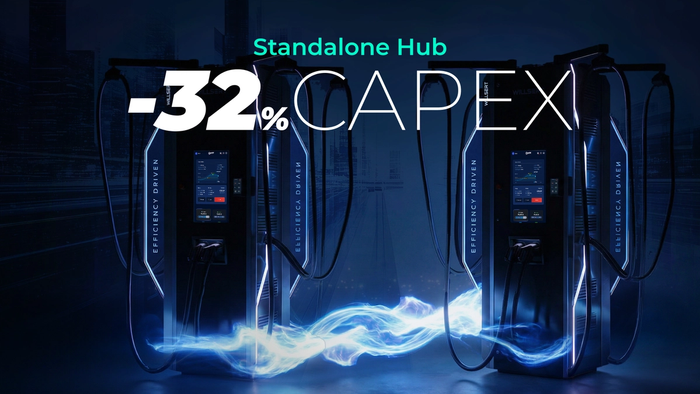
How the Standalone Hub Architecture Cuts Charging Site CAPEX by 32%
When a Charge Point Operator plans an 8-plug DC fast-charging site, the choice of hardware architecture has a bigger impact on total investment than most operators expect. In this case study, we compare a conventional standalone charger deployment against WILLBERT's S-HUB configu
From Futuristic to Standard: Silicon Carbide
There was a time when silicon carbide in EV charging sounded like something reserved for the future. Seven years ago, it was still considered an advanced, almost experimental semiconductor technology, discussed mainly in the context of aerospace, high-performance electronics, and