Crossing the Chasm: How EV Charging Must Evolve to Meet the Needs of the Early Majority

Introduction
In the world of innovation, launching a groundbreaking product is just the beginning. The real challenge? Gaining widespread adoption. This is where Crossing the Chasm, a concept introduced by Geoffrey Moore, comes into play. It highlights the critical gap between early adopters—tech enthusiasts eager to embrace new solutions—and the mainstream market, which demands reliability, ease of use, and clear business value. Companies that successfully bridge this divide don’t just sell products; they redefine industries.
The electric vehicle (EV) market stands at a pivotal point. While innovators and early adopters have driven the initial growth, the next critical phase—engaging the early majority—remains a challenge. According to Marek Gutt-Mostowy, CEO at WILLBERT by EUROLOOP, crossing this "chasm" is essential for widespread EV adoption.
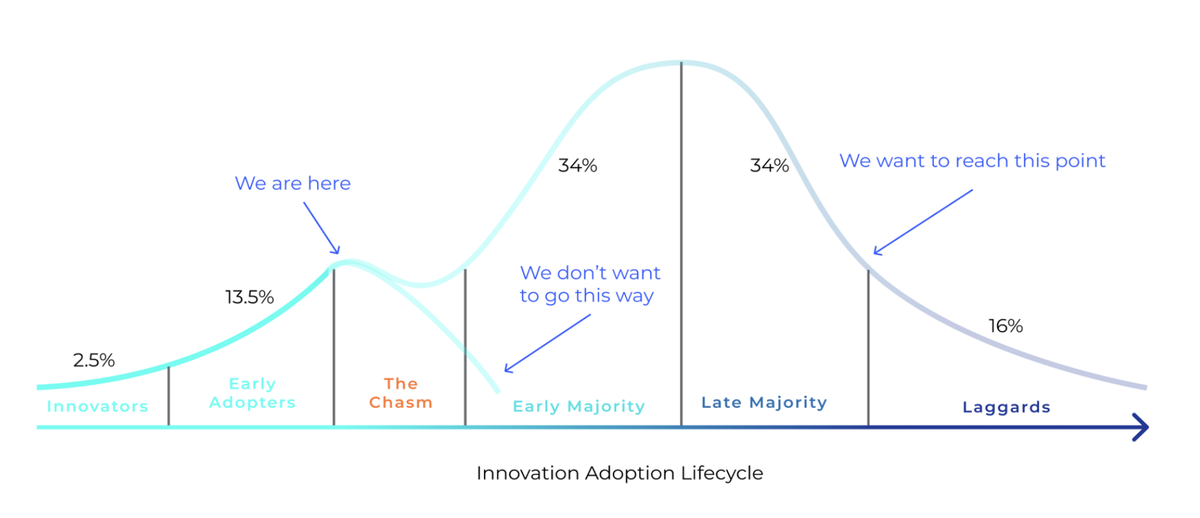
"We've relied heavily on early adopters willing to tolerate the imperfections of evolving infrastructure," Marek notes. However, the early majority expects more – seamless experiences, reliability, and convenience comparable to mature industries. Without meeting these higher standards, the momentum gained from early adopters could stall.
Is There Really a Problem?
The data paints a concerning picture:
- 29% of EV owners are considering switching back to internal combustion engine (ICE) vehicles due to frustrations with charging infrastructure.
- In the US, this figure rises to 46%—nearly half of EV drivers.
- Only 9% of consumers globally believe charging stations are adequately available.
These numbers reflect the experiences of early adopters. If the same frustrations hit the early majority, the consequences could be far greater.
Adapting Charging Infrastructure for the Early Majority
Marek emphasizes that each generation of chargers reflects the needs of its adopters:
- First-generation chargers (2015-2020) catered to innovators—bulky, unreliable, but exciting for tech enthusiasts.
- Second-generation chargers (2020-2024) improved for early adopters but still lacked full reliability and ease of use.
- Third-generation chargers must focus on user experience, reliability, consistency and scalability—the essentials for attracting the early majority.
"Charging should start with just a few taps—no apps, no unnecessary steps," Marek stresses. He envisions a future where charging stations blend with retail spaces, transforming into multifunctional hubs that offer more than just power.
The Road Ahead
Key focus areas include:
- Reliability and Uptime: Stations must operate flawlessly; downtime isn't an option.
- Retail-Integrated Hubs: Charging becomes an opportunity for retail and food service, creating value for both operators and customers.
- Scalability: Infrastructure must grow with demand, supporting multiple vehicles while minimizing operational costs.
Why Act Now?
The transition to electric mobility is inevitable, but the pace depends on the industry's response. "We must build infrastructure that doesn’t just function but delights, setting new standards for reliability and convenience," Marek concludes.
Read Marek’s full article here:
Tomasz Rydz supports the execution of marketing strategy by creating audiovisual content and managing event presence at WILLBERT by EUROLOOP. He has a strong background in automotive marketing, he previously worked at Toyota Central Europe and a renowned tuning company in Florida. At EUROLOOP, he focuses on brand visibility, content creation, and engaging customer experiences in the evolving EV charging market.
Bądź na bieżąco
Otrzymuj najnowsze informacje o ładowaniu EV, handlu na stacjach i ekosystemie WILLBERT prosto na swoją skrzynkę.
Artykuły, które mogą Cię zainteresować
How WILLBERT’s Technical Support Department Operates
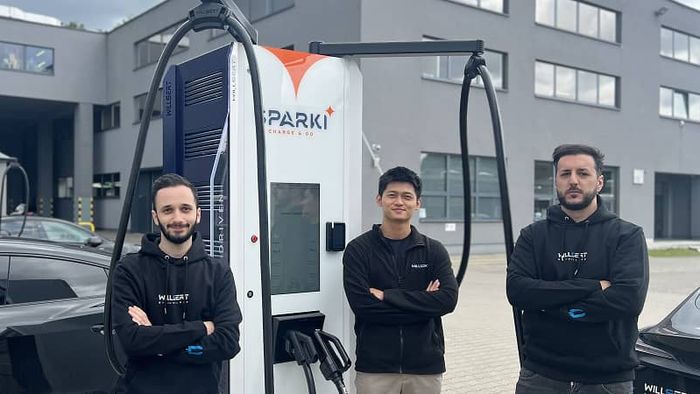
WILLBERT's technical support runs from Zabierzów, Poland. Real-time monitoring through HAWKe lets the team spot and fix faults before operators report them, with clear escalation paths for on-site work.
The Challenges of Integrating Payment Terminals into EV Chargers - White Paper
Our white paper compares terminal-on-charger setups from multiple vendors with an integrated payment architecture, using field data on pre-authorisation holds, AFIR and PCI DSS compliance, and maintenance.
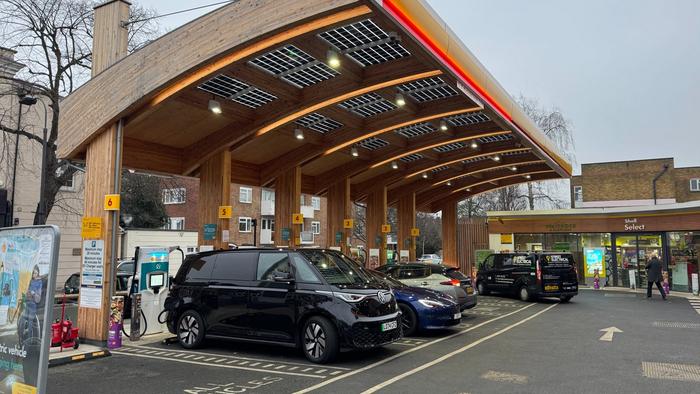
Transforming EV Charging Across the UK – Lessons from the Road
Our team toured UK motorway service areas and forecourts to see how charging fits real operations. What we found: uptime problems, layouts that waste space, and payment friction drivers still face.