511 kW Without a Transformer: Pevna Energy's Hub at Atut Ruczaj

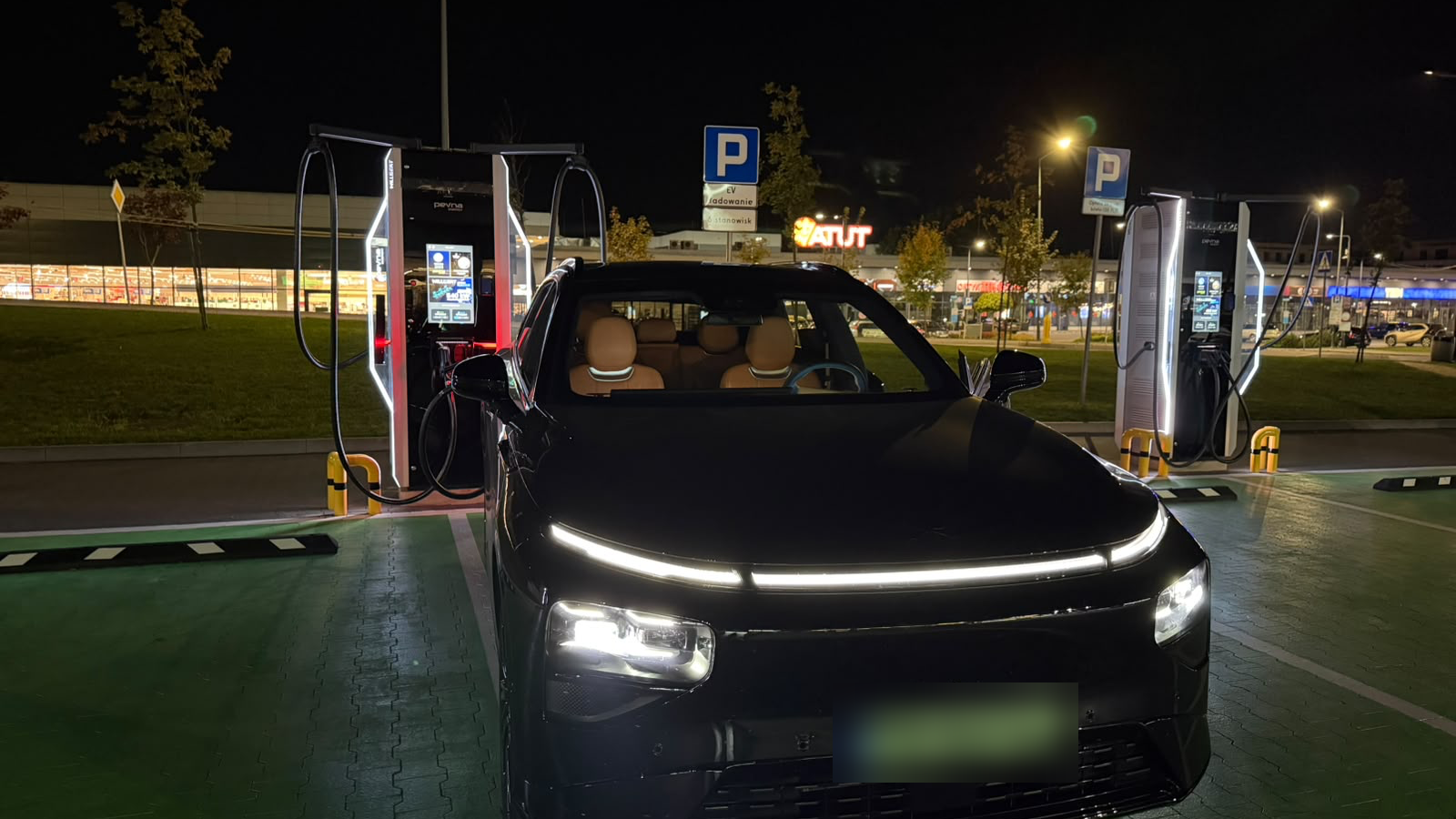
At 6% charge, an XPENG G9 plugged into Pevna Energy's hub at the Atut Ruczaj retail park in Kraków. One minute later the charger was delivering 511 kW. Twenty-eight minutes later the car had taken 95.7 kWh.
The site has no medium-voltage connection and no transformer station of its own. It runs on three ordinary low-voltage connections.
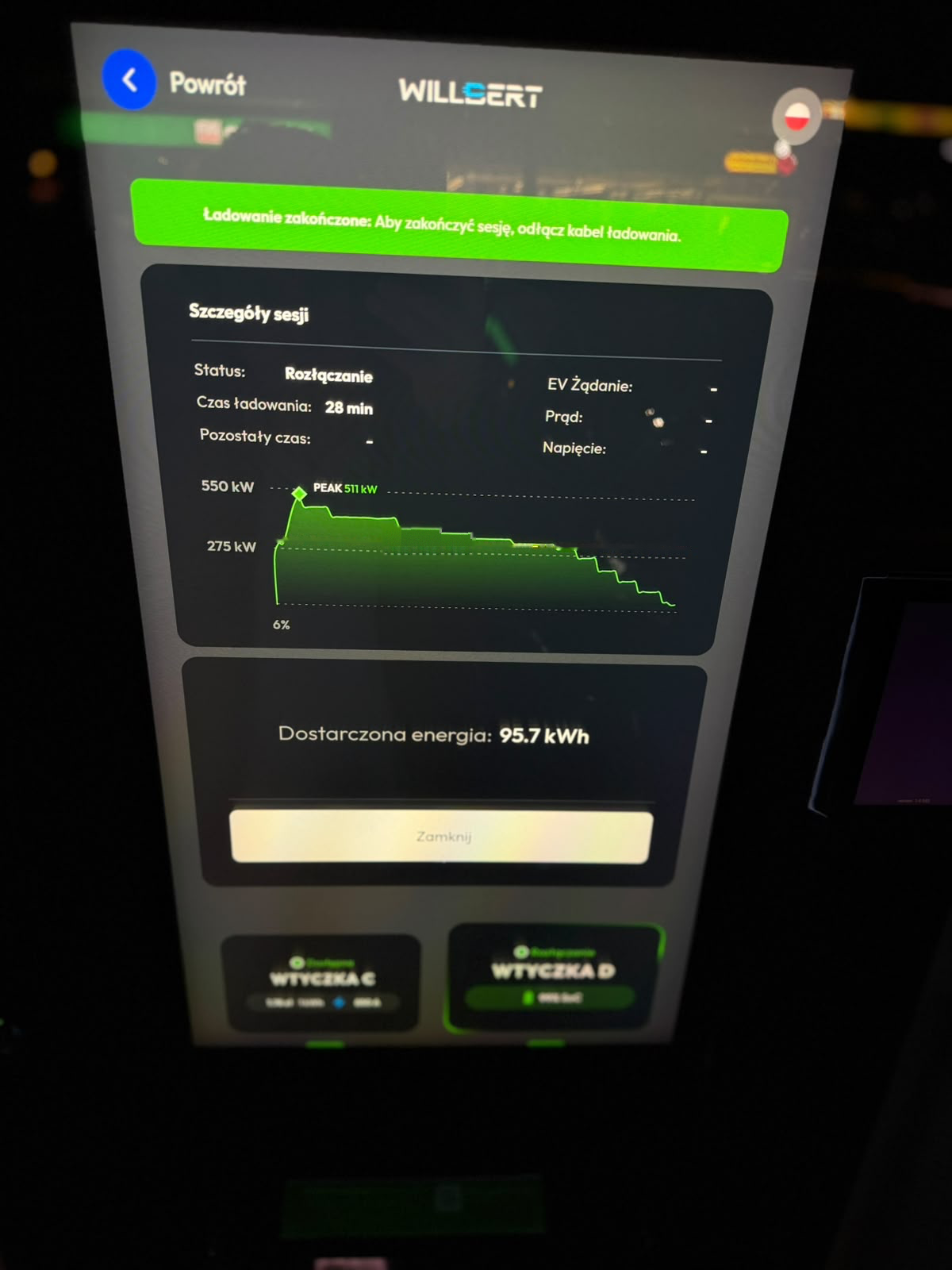
511 kW, measured
- Peak power: 511 kW, at 676 A and 756 V, reached within the first minute
- Held: above 380 kW up to around 40% charge (the car's own display read 386 kW at 40%)
- Energy: 95.7 kWh in 28 minutes
- Start: 6% state of charge
How does that compare? In December 2025, XPENG's Italian team reported 453 kW from a G9 on a 1 MW public charger in South Tyrol and called it the highest charging power recorded for a production car in Europe. At Ruczaj the same model went 58 kW higher, on a site with about half that charger's rating. As far as we know, 511 kW is also the highest charging power recorded at a public charger in Poland.
The constraint was power, not demand
A busy retail park in a large city is the kind of location every operator wants. The traffic is there. The usual route to high-power charging is the problem: apply for a medium-voltage connection, build a substation, wait. In Poland a new grid connection takes about 15 months on average, against 9–13 weeks in Germany, according to an analysis by Stoen Operator reported by Gramwzielone. In a city, a 1 MVA MV/LV transformer station alone costs around PLN 450–650k (about €105–150k), before a single kWh is sold.
“The biggest barrier to fast charging in Poland is access to power, not the number of cars. Ruczaj shows that a top-tier hub can be built on low-voltage connections alone, and that changes both the cost and the speed of the investment.” (Tomasz Widera, Founder, Pevna Energy)
The brief: power and a deadline
Pevna Energy builds and operates charging for a large premium car manufacturer, and the brief came with two fixed requirements: ultra-fast power at every plug, and a hub open on an agreed date.
A medium-voltage connection could have met the first. It could not meet the second: 12–24 months for connection conditions and a transformer station would have missed the date by a year or more.
The S-HUB architecture, here in its three-unit FlaSHUB configuration, was the only way Pevna could meet both. The power comes from low-voltage connections that could be obtained in time, and the chargers pool it on the DC side to reach the level the manufacturer asked for.
What is on site
- Three WILLBERT Amber II FlaSHUB chargers, two charging points each
- Three independent low-voltage grid connections, 180 kW each
- Power modules inside each charger. No central power cabinet
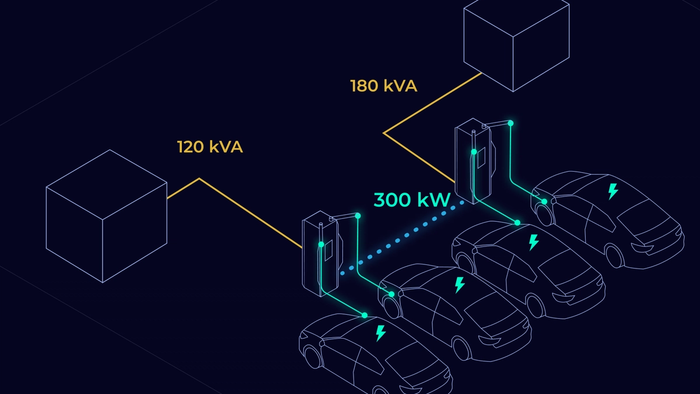
- Chargers linked on the DC side, so every plug can draw on the power of all three connections
- Up to 540 kW per plug, allocated in real time between the vehicles connected
- Site prepared for expansion to 1 MW
How three small connections became one 511 kW session
Each low-voltage connection feeds the silicon-carbide power modules of one charger, which convert AC to DC. Up to that point it is three separate, standard installations, and the grid operator sees exactly that: three loads, each within its own contracted power.
The difference is on the DC side. The three chargers are joined by a DC link, and the allocation software treats their modules as one pool. When the XPENG asked for 674 A, modules in all three units answered. When a second and third car arrive, power is redistributed between them, including mid-session. Nothing has to be rewired and nobody has to choose "the fast plug".
The same principle already runs at Pevna Energy's site in Skawina, where two low-voltage connections feed an S-HUB. Ruczaj takes it to three units and three connections. The architecture scales by adding units and connections, not by rebuilding the supply.
The transformer that wasn't built
To get comparable power the conventional way, an operator would install a central power cabinet with satellite dispensers and feed it from a new medium-voltage connection through its own MV/LV transformer station of around 1 MVA.
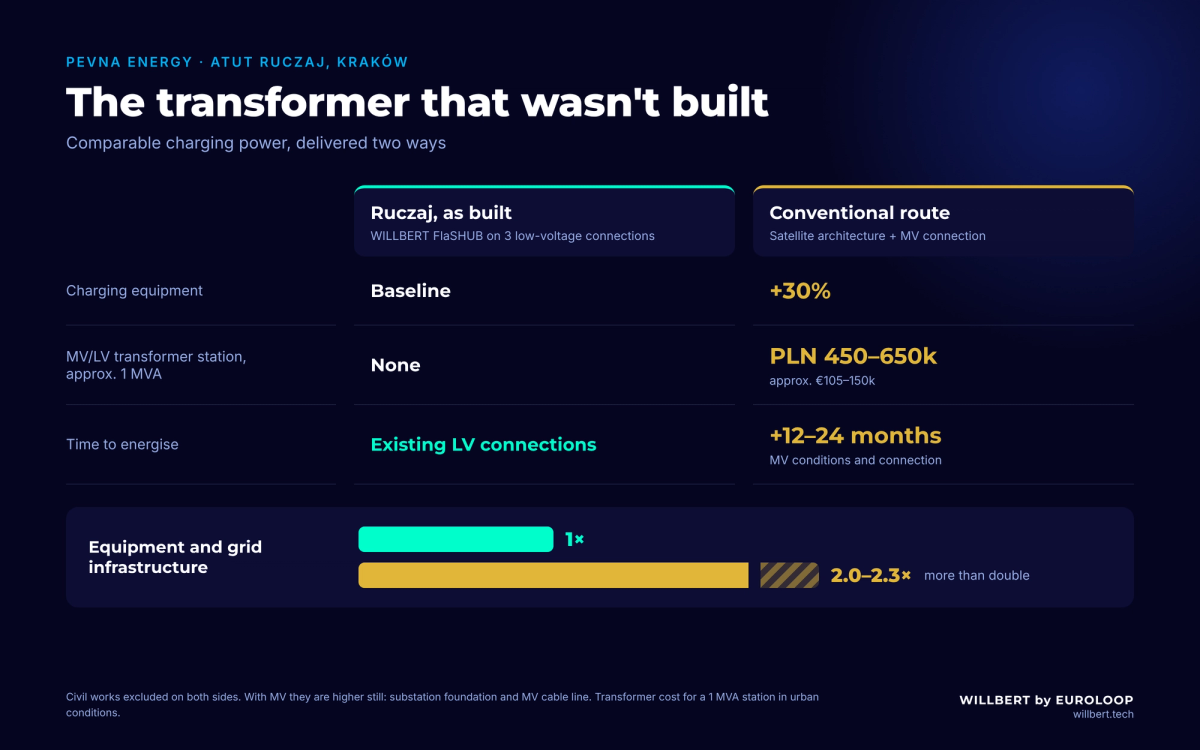
Civil works are left out on both sides. With MV they are higher still: the substation foundation and the MV cable line. An MV connection takes about 12 months as standard, and up to 24 where the local grid has no spare capacity.
The result: the satellite architecture would have needed more than twice the capital for equipment and grid infrastructure, and the hub would have started earning 12–24 months later.
Who needs 511 kW?
Few cars on sale today can draw this much, and the ones that can only do it for part of the session. That isn't the point. The headroom means the fastest cars get their full curve, a car that can take 300 kW gets 300 kW even when another vehicle is charging next to it, and electric vans and trucks, which charge at far higher power than cars, can use the same site. Power that would otherwise sit idle on an empty plug goes where a vehicle can use it.
What it changes for an operator
- Time to energise. Low-voltage connections are simpler and faster to obtain than a medium-voltage line with a substation.
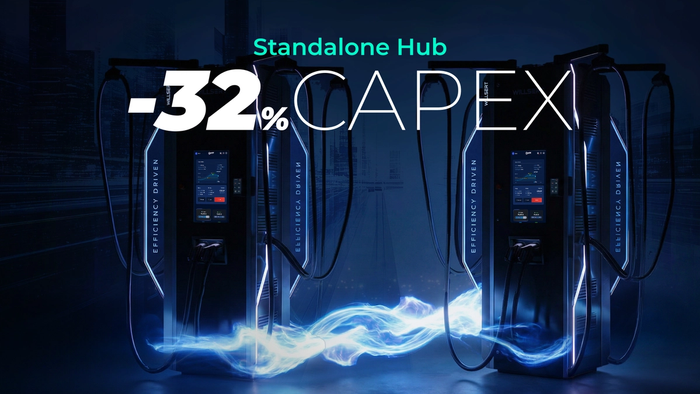
- CAPEX. No transformer station, no MV switchgear, no MV cable line. At Ruczaj that is half the capital for equipment and grid infrastructure.
- Growth in steps. Power modules and connections can be added as utilisation grows. Ruczaj is already prepared for 1 MW.
- Utilisation from day one. Shared power means the site earns on every kW it has, whatever the mix of cars on the plugs.
Start from the connections you have
Retail parks, forecourts and depots often already have more than one low-voltage supply, or can get one far sooner than a medium-voltage line. That is where a hub like Ruczaj starts.
Next in this series: Pevna Energy's smaller Skawina site, and what two shared chargers achieve next to a much larger hub on the same car park.
Tell us what connections your site has, and we will show you what power per plug it can deliver.
Contact usSources: XPENG Italy, "XPENG G9 MY26 sets new European record, reaching 453 kW" (29 Dec 2025); BYD France measurement of a Denza Z9GT at Atlante Saint-Flour (Aug 2026); Elocity, Pevna Energy hub launch (10 Aug 2026); Gramwzielone, grid connection times in Poland and Germany.
Piotr Krzemiński leads marketing and business strategy at WILLBERT, shaping its retail-focused EV charging solutions. With a background in management, he brings deep expertise from top marketing agencies to drive brand growth and market positioning.
Blijf op de hoogte
Ontvang het laatste nieuws over EV-laden, retail langs de weg en het WILLBERT-ecosysteem, rechtstreeks in uw mailbox.
Artikels die u wellicht interesseren
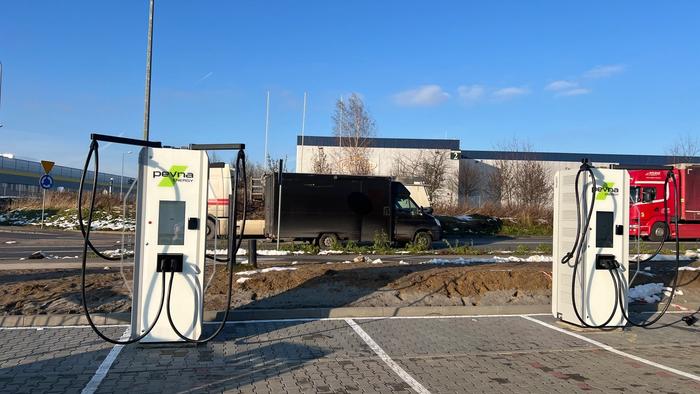
Polish Debut of the S-HUB in Skawina
Poland's first S-HUB is live in Skawina. Operated by Pevna Energy, it runs on two separate low-voltage grid connections and can scale from 200 kW to 720 kW without major hardware changes.
When Low Voltage Delivers High Power
The grid connection decides what a charging site can do. S-HUB combines two independent low-voltage connections on the DC side, so sites without medium-voltage access can still deliver high-power charging.
How the Standalone Hub Architecture Cuts Charging Site CAPEX by 32%
An 8-plug DC site, two architectures: four 400 kW standalone chargers against four Amber II units paired into two S-HUB systems. Same plugs, 40% less installed power and €121,000 lower CAPEX.